Sleep Optimisation: Basics to Advanced
JC-HPC
April 13, 2025
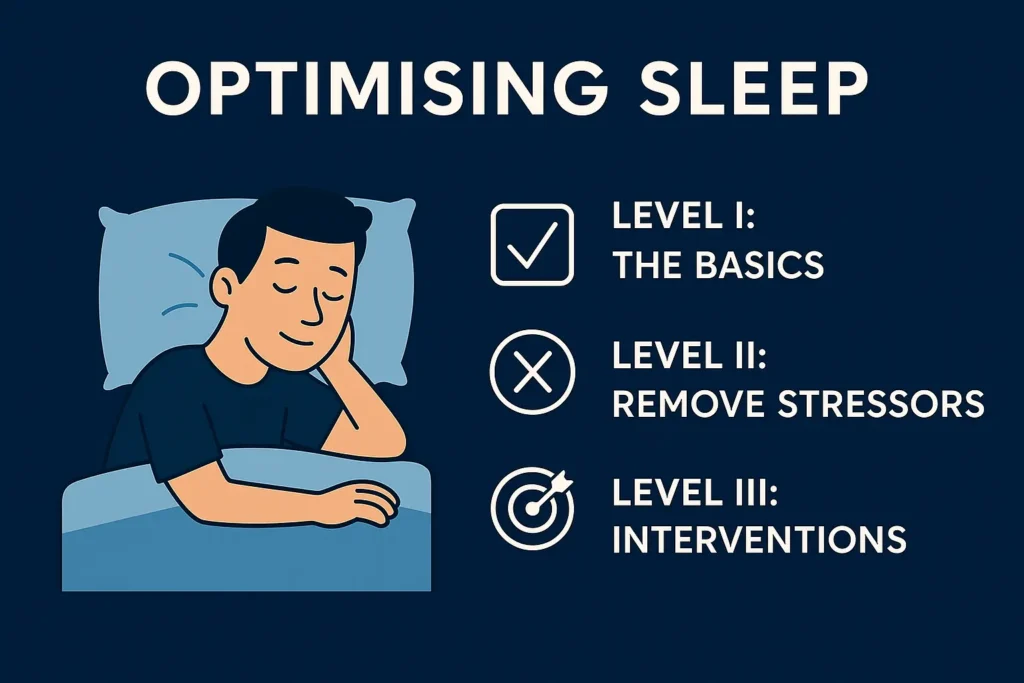
Sleep Optimisation: Basics to Advanced
Let’s get straight into it. There are some basic things you should already be doing for better sleep—and then we will get more advanced.
*This is not medical advice, you should check with your medical practitioner if this is appropriate for you and use your own judgement*
Feeling Better Starts With Sleeping Better
My Approach?
A blend of holistic and logical. Cover the foundations, then biohack what isn’t working.
It’s kind of like training in the gym: train, eat, sleep, and you’ll go far. But if you jump into fancy supplements or tools without a strong foundation? You might see temporary gains, but nothing sustainable.


Level I: The Basics That Actually Work
These aren’t sexy. They require discipline. That’s why few people do them.
But guess what? They work.
Temperature, Light, Sound – These are the 3 things that will give you 80% of your results.
– Temperature on the cooler side 16°c to 20°c promotes a better quality sleep
– Light minimised completely, block out curtains and no LEDs is optimal.
– Sound kept to a minimum or gentle. background noise/music to drown out external sounds.Limit Caffeine – Depending on your sensitivity, some can handle it before midday. Personally, any caffeine messes with my sleep—even if I have it at 8am.
Reduce Alcohol – Sure, it might help you fall asleep faster… but it wrecks the quality of your sleep.
Don’t Eat Too Close to Bedtime – Aim for your last meal at least 2.5 hours before bed. This helps with HGH (growth hormone) release, avoids digestion interfering with sleep, and prevents unwanted fermentation in the gut.
Screens Off Before Bed – Blue light disrupts your circadian rhythm, and tech stimulates your mind. Wind down, don’t ramp up. A minimum of 1 hour before bedtime.
Create a Wind-Down Routine – This is your secret weapon. Pattern disruption is key. Go for a walk, do some gentle yoga or meditation. Disconnect from the momentum of your day.
Pro tip: Skip the Netflix trap. More than 30–40 minutes of couch time before bed tricks your body into “pre-sleep mode” too early, reducing sleep quality later.
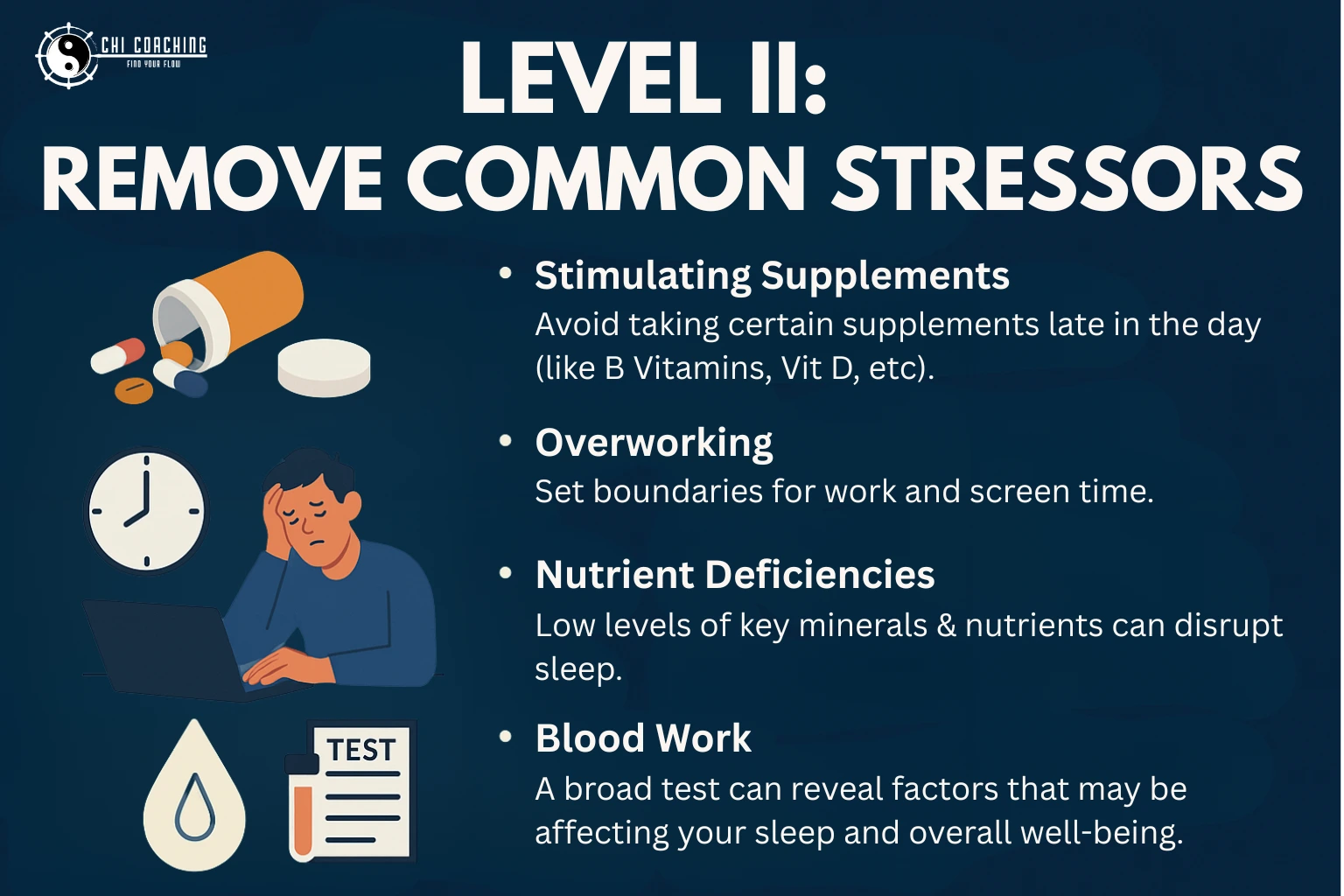
Level II: Remove Common Stressors
If you’ve nailed the basics and still feel like garbage in the morning, it’s time to look deeper.
Supplements Keeping You Awake – B-vitamins, especially B12 or B6, can be stimulating. Avoid them late in the day.
Overworking – If your mind is still firing at 10pm, you haven’t given yourself enough space to “wind down”.
Nutrient Deficiencies – Iron, magnesium, B6, zinc, and more can all affect sleep hormones and neurotransmitters.
Blood Tests – Get checked for deficiencies, thyroid function, and anything that could be impacting your nervous system or circadian rhythms
Level III: Strategic Interventions (Biohacks)
Here’s where you earn the biohacks. If you’ve covered Levels I and II, this is your next step.
Address Inflammation & Cortisol
Target: Parasympathetic SystemEvening relaxation – think low effort, high reward activities:
Epsom salt baths: supports detox and muscle relaxation
Slow mindful stretching: Yin Yoga is ideal for this
Breathwork: Box breathing and long exhale style.
Adaptogens – plant compounds that help your body regulate stress response
Ashwagandha* – lowers cortisol, supports GABA, can help with anxiety.
Rhodiola – can help enhance energy, mood and stress resilience.
*some people have experienced adverse reactions; anhedonia, worsening of thyroid (do adequate research first).
Nature – beach, ocean, mountains, will help reduce cortisol
Support Your Liver
Target: Poor detox pathways that can affect sleep quality (think waking up 3am)Milk Thistle – anti-oxidant rich herb that supports liver cell regeneration.
TUDCA – a bile acid that supports bile flow, good for fat digestion and liver detox.
- NAC – an amino acid that is a precursor to “glutathione” the bodies main detox antioxidant.
Balance Blood Sugar
A drop in blood sugar during sleep can wake you up
Ensure a steady insulin response during the day via meals
- Continuous Blood Glucose Monitor (CBGM): Track blood sugar levels throughout the day and night.
- Ceylon Cinnamon: improves insulin sensitivity (don’t confuse with the common cassia cinnamon).
Supplement Smart
Magnesium Glycinate – A highly bioavailable form of magnesium.
200-300mg at night typically has a calming effect.
It can negatively affect sleep in a minority of people so pay attention.Zinc* – an essential trace mineral needed for hormone production, immune function and sleep regulation.
Aim for under 20mg total per day
*High dose and long-term use can suppress copper and iron.Taurine* – an amino acid that’s depleted by stress
500-1000mg can help support sleep through reduced glutamate.
* may slightly lower blood pressureL-Theanine – an amino acid found in green tea good for relaxed alertness.
100-200mg at night to calm the mental state.
Circadian Rhythm Hacking
Blue Light Blockers: Start wearing them after sundown.
Morning Light: Get outside within 30 minutes of waking to train your circadian rhythm. (Use a light box in winter if required)
Sunset Walks: Teach your body when night begins
Final Thoughts: Track, Reflect, Adjust
Don’t overcomplicate it. Start with the foundations and be honest—are you actually doing the basics consistently? If so, then dig deeper.
The goal isn’t just “better sleep.”
It’s to wake up feeling restored, clear-headed, and ready to live.
If you need support working out where you are at or getting to optimal sleep then you can always book a discovery call to see how I can support you
~ Jeremy Cole, Holistic Performance Coach ~