50 Ways to Improve Brain Function
JC-HPC
April 26, 2025
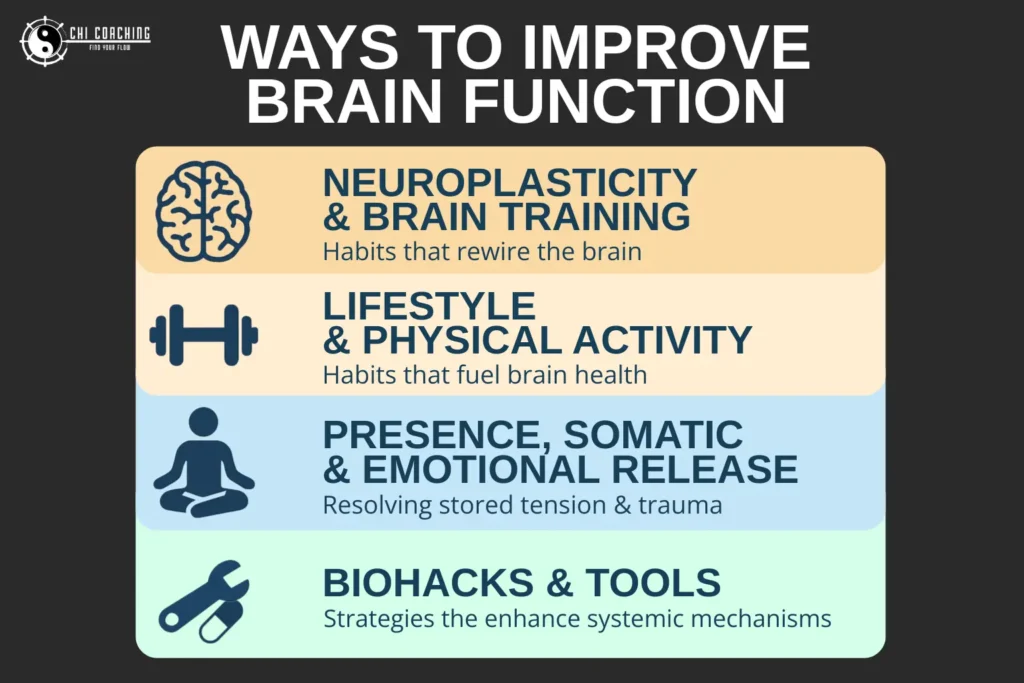
50 Things You Can Do To Improve Brain Function
This list is NOT something you should print and start ticking off.
This is simply a list of ideas and areas for research.
It goes without saying that each person is individual in their health (especially if they are taking medications or have a condition) and a supplement or intervention can negatively effect them.
Do a deep dive of research on adverse effects for each supplement before you decide to start taking it.
In fact you should understand the following before taking anything:
- What is its mechanism of action
- Who shouldn’t be taking it
- When shouldn’t I take it
- What is the potential downside of it
- Is it for long term use or short cycles
- Are there differing qualities and forms to watch out for
Okay now onto the list…
*This is not medical advice, you should check with your medical practitioner if this is appropriate for you and use your own judgement*
NEUROPLASTICITY & TRAINING
Practice daily mindfulness meditation (10–20 min)
Use focused attention training (e.g., counting breaths or candle gazing)
Journal daily reflections on your triggers and emotional responses
Do cold exposure (cold showers or ice baths)
Use the Pomodoro method to build focused attention
Play dual n-back or working memory games
Practice delayed gratification (e.g., wait 10 mins before eating a treat)
Use neurofeedback or HRV biofeedback
Learn and practice conscious communication / NVC
Engage in gratitude journaling
SOMATIC & EMOTIONAL RELEASE
Practice body scans or somatic tracking
Do TRE (Tension & Trauma Release Exercises)
Explore EMDR or somatic experiencing therapy
Regular yin or slow flow yoga with breath focus
Use vagus nerve stimulation (humming, gargling, singing)
Do pendulation exercises to move between stress and calm
Dance or move intuitively to express suppressed emotion
Use “sensation tracking” to grow insular awareness
Attend ecstatic dance or conscious movement classes
Practice loving-kindness (Metta) meditation
SUPPLEMENTS & NEUROPROTECTIVES
Magnesium threonate or glycinate GABA support + brain penetration
Omega-3s (EPA/DHA) neuroprotection, memory, cognitive fluidity
Lion’s Mane mushroom for BDNF & neuroplasticity
Alpha-GPC or CDP-Choline boosts acetylcholine for mental clarity
Bacopa Monnieri for memory and anxiety regulation
Ginkgo Biloba enhances cerebral blood flow and focus
Rhodiola Rosea gentle adaptogen for mood, stress resilience, and vitality
Phosphatidylserine supports memory retention and cortisol balance
L-Theanine calm focus, enhances alpha brain waves naturally
Acetyl-L-Carnitine (ALCAR) mitochondrial energy and cognitive sharpness
LIFESTYLE & PHYSICAL
High-quality sleep (7–9 hrs, dark room, no blue light before bed)
Daily sunlight exposure within 30 mins of waking
Exercise regularly – especially resistance training and zone 2 cardio
Walks in nature – activates PFC and calms amygdala
Breathe through your nose all day (improves CO2 tolerance & calm)
Box breathing or 4-7-8 breathing daily
Spend time with emotionally safe people (co-regulation)
Eat protein at breakfast to stabilize mood and cognition
Eat colorful polyphenol-rich foods for brain health
Reduce refined sugar, seed oils, and ultra-processed foods
BIOHACKS & TOOLS
Use red light therapy (forehead/temples)
Try transcranial stimulation (with care)
Wear blue light blockers at night
Use grounding or earthing mats
Track and improve HRV with a wearable device
Try float tanks / sensory deprivation for deep nervous system reset
Do alternate nostril breathing (nadi shodhana)
Use binaural beats focused on alpha or theta brainwaves
Practice mirror work or internal dialogue journaling
Use a structured digital detox window each day (or a full day each week)
Final Thoughts: Track, Reflect, Adjust
Don’t overcomplicate it. Start with the foundations and be honest—are you actually doing the basics consistently? If so, then dig deeper.
If you need support working out where you are at and where to direct your focus then you can book a discovery call to see how I can support you.